

 This article appeared in the June 2007 edition of Connections Magazine (Ireland)
People who know nothing about wine – no, not you, I'm talking about people who think Chardonnay is a brand name – somehow know enough to say “I like a dry wine” even if they don't. Yes, the underlying insecurities that seem to cluster around wine will cause otherwise trustworthy people to lie. My own mother - whose favorite wine is White Zinfandel (ouch! God knows I tried) – will insist on her preference for dry wine even though each sip of White Zin betrays it. Is sweet wine really that embarrassing? Will drinking it get you banished from polite society?
Funny enough, the same mysterious forces have been conspiring against oaked wines. Walk into any wine shop and you'll see quite a few labels boasting “unoaked” – fully 10% of all white wines in Oddbins here in the UK now make such a claim. Some people even believe that they're allergic to oak in wine although it hasn't been identified as an allergen by the medical community. Is oak in wine really that bad? Has it suddenly become naff?
This article appeared in the June 2007 edition of Connections Magazine (Ireland)
People who know nothing about wine – no, not you, I'm talking about people who think Chardonnay is a brand name – somehow know enough to say “I like a dry wine” even if they don't. Yes, the underlying insecurities that seem to cluster around wine will cause otherwise trustworthy people to lie. My own mother - whose favorite wine is White Zinfandel (ouch! God knows I tried) – will insist on her preference for dry wine even though each sip of White Zin betrays it. Is sweet wine really that embarrassing? Will drinking it get you banished from polite society?
Funny enough, the same mysterious forces have been conspiring against oaked wines. Walk into any wine shop and you'll see quite a few labels boasting “unoaked” – fully 10% of all white wines in Oddbins here in the UK now make such a claim. Some people even believe that they're allergic to oak in wine although it hasn't been identified as an allergen by the medical community. Is oak in wine really that bad? Has it suddenly become naff?
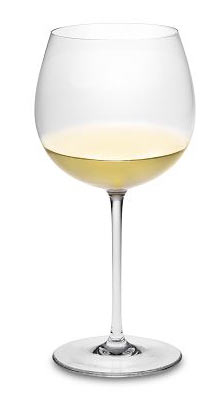 If it has, someone forgot to tell the fine wine community. Practically all of the world's finest red wines and many of its whites are nearly as dependent on oak as they are grapes. This centuries old relationship shows no sign of slowing down. Still, at the lower end of the price spectrum clumsily oaked Chardonnay, the buttery vanilla toffee wines that were fashionable in in the 80's and 90's now seem as in style as a mullet haircut. Since Chardonnay is sometimes considered the ultimate oak vehicle, the backlash against it in favor of racier grapes varieties such as Albariño, Riesling and Pinot Grigio hasn't helped. Neither has the real wine movement which emphasizes organic farming and minimal intervention winemaking.
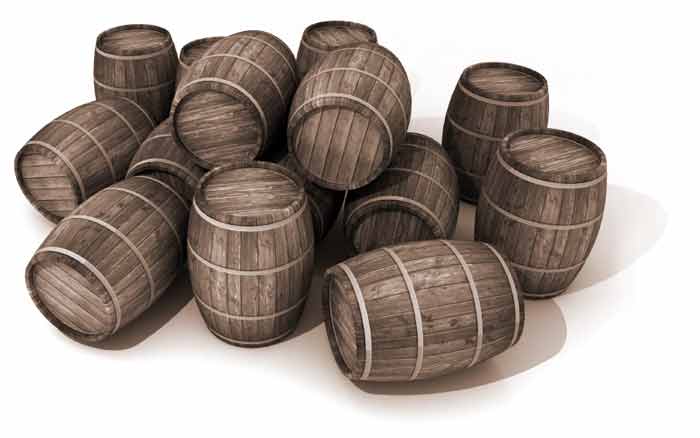
Although oak is mainly associated with the flavours they impart upon a wine, it has been a storage and shipping container for thousands of years. The Celts are generally credited with coming up with a liquid-tight barrel in 300 BC, which is know to have been used for wine by at least the 2nd century BC. It's easy to see how they replaced terra-cotta amphorae, being more durable and easily rolled. The flavours imparted by the barrels were simply a fortuitous by-product, especially if they were oak. Other woods, like cherry and chestnut are still used but the overwhelming favourite is oak.
Somewhere along the way, it was discovered that the heat from flames used to bend the wood to form barrels provided different flavours and other characteristics, depending on how toasted the insides of the barrels became. Barrels are now toasted to order in light, medium or heavy toast. Since toasting acts as a buffer between the wine and the wood, the lighter the toasting, the more the wine will taste more directly of oak and also be highly tannic. Medium toast tends to produce more softer wines with more vanilla notes while heavy toasting really alters the wood producing clove, nutmeg, coffee and – of course – toast flavours.
If it has, someone forgot to tell the fine wine community. Practically all of the world's finest red wines and many of its whites are nearly as dependent on oak as they are grapes. This centuries old relationship shows no sign of slowing down. Still, at the lower end of the price spectrum clumsily oaked Chardonnay, the buttery vanilla toffee wines that were fashionable in in the 80's and 90's now seem as in style as a mullet haircut. Since Chardonnay is sometimes considered the ultimate oak vehicle, the backlash against it in favor of racier grapes varieties such as Albariño, Riesling and Pinot Grigio hasn't helped. Neither has the real wine movement which emphasizes organic farming and minimal intervention winemaking.
Although oak is mainly associated with the flavours they impart upon a wine, it has been a storage and shipping container for thousands of years. The Celts are generally credited with coming up with a liquid-tight barrel in 300 BC, which is know to have been used for wine by at least the 2nd century BC. It's easy to see how they replaced terra-cotta amphorae, being more durable and easily rolled. The flavours imparted by the barrels were simply a fortuitous by-product, especially if they were oak. Other woods, like cherry and chestnut are still used but the overwhelming favourite is oak.
Somewhere along the way, it was discovered that the heat from flames used to bend the wood to form barrels provided different flavours and other characteristics, depending on how toasted the insides of the barrels became. Barrels are now toasted to order in light, medium or heavy toast. Since toasting acts as a buffer between the wine and the wood, the lighter the toasting, the more the wine will taste more directly of oak and also be highly tannic. Medium toast tends to produce more softer wines with more vanilla notes while heavy toasting really alters the wood producing clove, nutmeg, coffee and – of course – toast flavours.
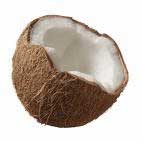 Different types of oak imparts different flavours as well. Oak for wine barrels come mainly from France and the United States. French oak, with its tight grain and subtle aromatics – especially from Allier, Bourgongne, Nevers and Tronçais – are highly prized by winemakers worldwide. American Oak – as may be expected – is more bold and brash, wider grained and more aromatic. It can often be identified by a coconut aroma, which at high concentrations has been know to produce white wines that can only be described as suntan lotion or Hawaiian Tropic. Surf's up dude! Still, American oak is an essential part of great wines such as traditional Rioja (white and red) as well as traditional Australian Shiraz (Penfold's Grange). Interestingly enough, Californian winemakers are fairly mixed when it comes to using American or French oak despite the fact that French oak barriques (barrels) cost over twice as much.
Flavour is not the only thing that barrels contribute to wine, especially since they are virtually flavourless after 2 to 3 uses. Older barrels are either used in conjunction with new barrels to control the flavour influence of oak or on their own for other properties. They naturally clarify and stabilize the wine, soften tannins, improve colour and very gently oxidize the wine. This gentle oxidation occurs by evaporation through the barrel which are topped up often during barrel aging. It also lowers fruitiness, producing more of a soft “old world” style wine than a fruit forward “new world” style wine, regardless if it's made in Europe, the USA, Australia or Chile.
Different types of oak imparts different flavours as well. Oak for wine barrels come mainly from France and the United States. French oak, with its tight grain and subtle aromatics – especially from Allier, Bourgongne, Nevers and Tronçais – are highly prized by winemakers worldwide. American Oak – as may be expected – is more bold and brash, wider grained and more aromatic. It can often be identified by a coconut aroma, which at high concentrations has been know to produce white wines that can only be described as suntan lotion or Hawaiian Tropic. Surf's up dude! Still, American oak is an essential part of great wines such as traditional Rioja (white and red) as well as traditional Australian Shiraz (Penfold's Grange). Interestingly enough, Californian winemakers are fairly mixed when it comes to using American or French oak despite the fact that French oak barriques (barrels) cost over twice as much.
Flavour is not the only thing that barrels contribute to wine, especially since they are virtually flavourless after 2 to 3 uses. Older barrels are either used in conjunction with new barrels to control the flavour influence of oak or on their own for other properties. They naturally clarify and stabilize the wine, soften tannins, improve colour and very gently oxidize the wine. This gentle oxidation occurs by evaporation through the barrel which are topped up often during barrel aging. It also lowers fruitiness, producing more of a soft “old world” style wine than a fruit forward “new world” style wine, regardless if it's made in Europe, the USA, Australia or Chile.
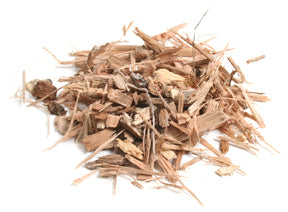 Given the high cost of barrels and the level that much winemaking is dependent on oak, there has been much use of oak alternatives like oak chips. At 1/20th the price of barrels, they've brought luxurious oak to much cheaper wines with some disasterous results. At least in the early days. Now, with micro-oxygenation, a way of simulating the gentle, gradual oxidation that occurs in barrels, as well as with the world's highest quality oak readily available toasted to order in chip form the distinction isn't so clear. Traditionalists poo-poo the use of oak chips but modernists champion them for much better control almost regardless of cost savings.
Some highly acclaimed wines use oak chips in California and Australia and as of December 2006 they're legal to use in the top level appellations in Europe. They've been used since 2004 in lower level appellations in France such as Vin de Pays and Vin de Table amidst bitter protests about the “McDonaldization” of wine. The times are changing quickly as France and Italy have lost a great deal of market share to Australia in recent years and are desperate to regain any competitive advantage. It's still difficult to tell which wines get their oak characteristics from barrels and which from chips as there aren't any labeling requirements. Indeed, few winemakers will volunteer that they're making wine with oak chips as they still conjure up little mystique regardless if they're legal or not.
It's a little strange to see European governments rushing to legalize oak chips while at the same time so many wines are making a point to show that they're unoaked. The growing Real Wine movement – epitomised by the movie Mondovino – which emphasizes organic viticulture and minimal manipulations (read: less oak) in the wine making process also seems to be at odds with the legislation. Not to mention the recent popularity of unoaked white wines such as Riesling, Pinot Grigio, Chablis and New Zealand Sauvignon Blanc.
The reality is that oak is a useful and welcome part of wine making. So before you jump on the “I like an unoaked wine” bandwagon, remember all of the great wines of the world that are superb expressions of oak, like virtually every fine red wine, Cote d'Or Chardonnay, fine white Bordeaux and traditional Rioja.
Given the high cost of barrels and the level that much winemaking is dependent on oak, there has been much use of oak alternatives like oak chips. At 1/20th the price of barrels, they've brought luxurious oak to much cheaper wines with some disasterous results. At least in the early days. Now, with micro-oxygenation, a way of simulating the gentle, gradual oxidation that occurs in barrels, as well as with the world's highest quality oak readily available toasted to order in chip form the distinction isn't so clear. Traditionalists poo-poo the use of oak chips but modernists champion them for much better control almost regardless of cost savings.
Some highly acclaimed wines use oak chips in California and Australia and as of December 2006 they're legal to use in the top level appellations in Europe. They've been used since 2004 in lower level appellations in France such as Vin de Pays and Vin de Table amidst bitter protests about the “McDonaldization” of wine. The times are changing quickly as France and Italy have lost a great deal of market share to Australia in recent years and are desperate to regain any competitive advantage. It's still difficult to tell which wines get their oak characteristics from barrels and which from chips as there aren't any labeling requirements. Indeed, few winemakers will volunteer that they're making wine with oak chips as they still conjure up little mystique regardless if they're legal or not.
It's a little strange to see European governments rushing to legalize oak chips while at the same time so many wines are making a point to show that they're unoaked. The growing Real Wine movement – epitomised by the movie Mondovino – which emphasizes organic viticulture and minimal manipulations (read: less oak) in the wine making process also seems to be at odds with the legislation. Not to mention the recent popularity of unoaked white wines such as Riesling, Pinot Grigio, Chablis and New Zealand Sauvignon Blanc.
The reality is that oak is a useful and welcome part of wine making. So before you jump on the “I like an unoaked wine” bandwagon, remember all of the great wines of the world that are superb expressions of oak, like virtually every fine red wine, Cote d'Or Chardonnay, fine white Bordeaux and traditional Rioja.
 * naff [naf] Chiefly British Slang
1. unstylish; lacking taste; inferior.
–verb (used without object)
2. to goof off; fool around (often fol. by around or about).
—Verb phrase
3. naff off go away: used as an exclamation of impatience.
—Related forms
naffness, noun
(definition from Dictionary.com)
* naff [naf] Chiefly British Slang
1. unstylish; lacking taste; inferior.
–verb (used without object)
2. to goof off; fool around (often fol. by around or about).
—Verb phrase
3. naff off go away: used as an exclamation of impatience.
—Related forms
naffness, noun
(definition from Dictionary.com)
A Few Good Oaked White Wines:
To get at the heart of the matter, let's try some fine often overlooked oaked whites.Traditional White Rioja
 Lopez de Heredia Viña Tondonia Gran Reserva Blanco 1981
One of the world's finest white wines, often compared to top white Burgundy, it is very traditionally made which means it's more highly oxidized than most dry white wines. Gold in colour, it's rich, very smoky, herbal, suprisingly fruity with lightly toasted coconut and perfectly balanced acidity. A real treat and one of the last real bargains in the fine wine world.
Lopez de Heredia Viña Tondonia Gran Reserva Blanco 1981
One of the world's finest white wines, often compared to top white Burgundy, it is very traditionally made which means it's more highly oxidized than most dry white wines. Gold in colour, it's rich, very smoky, herbal, suprisingly fruity with lightly toasted coconut and perfectly balanced acidity. A real treat and one of the last real bargains in the fine wine world.  $80
Cune Monopole Rioja Blanco 2005
This is a great introduction to traditional white Rioja. It has a nice degree of toasted coconut (from American Oak barrels) but with a fresh lemony acidity.
$80
Cune Monopole Rioja Blanco 2005
This is a great introduction to traditional white Rioja. It has a nice degree of toasted coconut (from American Oak barrels) but with a fresh lemony acidity.  $13
$13
Dry White Bordeaux
While red Bordeaux gets pretty much all of the press, a fine white Bordeaux can easily steal the show at any dinner party. New Zealand Sauvignon Blanc fans will be surprised at how well the Sauvignon Blanc in these wines take oak. 2005 Moulin des Dames Bergerac Sec 50% Sauvignon Blanc 40% Semillon 10% Muscadelle This is a very traditionally made Bordeaux-style wine. I have to say Bordeaux-style since Bergerac is not officially in Bordeaux but adjacent to it. Moulin des Dames is one of Bergerac's finest producers and this wonderful wine, with delicious white peach, subtle oak and spicy finish would compare well with a white Haut Brion. $22
2005 Tour Leognan
65% Sauvignon Blanc and 35% Sémillon
2nd wine of Chateau Carbonnieux, one of the classified Graves chateaux known for its dry white wines. Don't let the screw top fool you – this is a serious wine. It's more obiously Sauvignon Blanc than the Bergerac with a nuanced grassiness amidst the well integrated oak.
$23
$22
2005 Tour Leognan
65% Sauvignon Blanc and 35% Sémillon
2nd wine of Chateau Carbonnieux, one of the classified Graves chateaux known for its dry white wines. Don't let the screw top fool you – this is a serious wine. It's more obiously Sauvignon Blanc than the Bergerac with a nuanced grassiness amidst the well integrated oak.
$23
Wine Oak Facts:
 Cost of Average Oak Barrel: $1,130 for French Oak and $400 for American Oak
Cost of new oak barrels per bottle of wine = $3.89 French $1.32 American
Average cost of grapes per bottle (Napa Valley Chardonnay) = $4.30
Cost of oak chips per bottle: $0.18
Chance that a $5.00 bottle will be aged in all new oak barrels = 0%
Typical percentage of new oak used in 1st growth Bordeaux: 100%
Typical percentage of new oak used in top white Cote d'Or Burgundy: 30%
Typical percentage of new oak used in Dominique Laurent's red Burgundy: 200% (racked from one new barrel to another new barrel)
Woodchuck: A Winegeek who likes, or has a high tolerance for, a lot of Oak in his or her wine. See Beaver and Termite. (from www.compleatwinegeek.com)
Always eat the cork when drinking an “oaked” wine, as the two woods bring out each other’s flavors. (Advice from Jim Boyce in China)
Oak Monster: An extremely oaked wine (from Gary Vaynerchuk at Wine Library TV)
Cost of Average Oak Barrel: $1,130 for French Oak and $400 for American Oak
Cost of new oak barrels per bottle of wine = $3.89 French $1.32 American
Average cost of grapes per bottle (Napa Valley Chardonnay) = $4.30
Cost of oak chips per bottle: $0.18
Chance that a $5.00 bottle will be aged in all new oak barrels = 0%
Typical percentage of new oak used in 1st growth Bordeaux: 100%
Typical percentage of new oak used in top white Cote d'Or Burgundy: 30%
Typical percentage of new oak used in Dominique Laurent's red Burgundy: 200% (racked from one new barrel to another new barrel)
Woodchuck: A Winegeek who likes, or has a high tolerance for, a lot of Oak in his or her wine. See Beaver and Termite. (from www.compleatwinegeek.com)
Always eat the cork when drinking an “oaked” wine, as the two woods bring out each other’s flavors. (Advice from Jim Boyce in China)
Oak Monster: An extremely oaked wine (from Gary Vaynerchuk at Wine Library TV)
{democracy:9}
Enter to Win a New Pull-Taps Corkscrew
A $12 Value! 3 Winners will be Picked!
You can't get a better corkscrew at any price. Sorry Laguiole! To enter, please leave a comment regarding your thoughts on oaked wines or cork eating. A simple "oaky doak" or "mmmm corks" will do. 3 winners will be chosen at random Monday, February 11 2008 at 12 noon EST.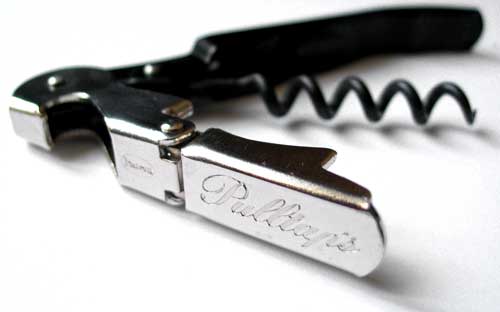


Comments
mmmmmmmmmmmmmmmmmmmm corks!
Count me in please! ~ :) Thanks!
My vote is with the barrique and the Barack. Oaky doaky, super duper!
Everything in moderation I heard someone say once…same goes with oak…
there is a place for “da-oak” in many varieties… sauv blanc may love the stainless, but my chards SCREAM for oak!! bring on the creamy butter!
There’s room for everyone under the oaked (or unoaked) tent. I think it’s overused on whites, espcially Chards, and by contrast a steely, clean, almost austere white Burgundy is a joy to behold. But let us not forget, too, that oak adds a lot of good things to the right wines and when done in the proper proportions, with the right level of toast, and the right balance of French and Yank, new and old.
I wouldn’t cook without spice, winemakers should be able to oak their wines in ways that they like and the market wants to drink.
I go with the barrique but not the Barack. After all – a decent red wine is aged and 3 years is… immature. Give me something with more refinement.
If variety is the spice of life, the spice of wine is oak. While not being a corklicking, teabag sucking total oak bloke, the idea of wine without oak seems to me to be like cooking without spice: it takes away a whole dimension of variety. I don’t want to only consume 70s style ready dinners and boil-in-the-bag fish fillets, life is so much better when you can run the range of Asian, African, Mediterranean and (yup, even) American nosh. So naff off, quercophobes.
As usual, moderation is the key to good balance. Vive Oak.